
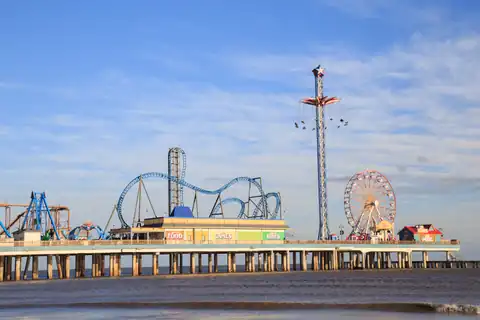
Match the Light to Your Cruise Schedule
Early and late daylight often gives people, ships, and coastlines softer shadows than a clear midday sky. That does not mean those hours will line up with your port visit. A Galveston cruise may spend sunrise at sea, reach a port after the sun is higher, or leave before sunset. Check the actual arrival and departure times first, then decide what is realistic to photograph ashore and what you can photograph from the ship.
Sunrise and sunset shift with date and location. Check them for the port or position where you expect to be, and compare them with the ship's posted time and any local-time instructions. Also look at which direction your deck or balcony faces on the day; the ship can turn or berth differently from what you imagined. Plan a subject and an accessible position, then stay flexible if clouds or the ship's timing change the light.
Early Morning: Shorelines, Ship Details, and Quiet Decks
Low morning light can reveal shape on a coastline or the ship's exterior without the hard overhead shadows of midday. If your ship is approaching a Caribbean port around sunrise, reach an open public deck before the view becomes crowded with nearby docks and equipment. Take a wide frame first, then photograph the smaller harbor details as you get closer.
On a sea day, morning can be a useful time to photograph deck areas and exterior details before they fill with activity. Do not assume the sea will be calm or the deck empty. Check the wind, choose a safe position, and watch the shutter speed as you zoom toward a distant shore. If the sun is behind the ship or hidden by clouds, shift attention to the lit side of the ship or to a closer subject instead of waiting for a particular sunrise picture.
Midday: Use the Port Time You Actually Have
Many shore visits put you in a town, on a beach, or on an excursion when the sun is high. That light makes small details and colors easy to see, but it can put faces beneath hats into dark shade and create bright reflections on water and pale sand. Look for open shade for people, photograph architecture from a side with useful light, and check your highlights before moving on.
Midday is not a reason to leave the camera aboard. It may be the only time your itinerary gives you at Cozumel, Costa Maya, Roatán, or another port. Use the available hours for specific subjects: a boat at the pier, a street scene, ship details from shore, or an activity you chose. If you will be snorkeling, surface and underwater photos need different choices; see the underwater photography guide when that activity is part of your day.
For harsh shadows and water glare, the sun and changing light guide explains how to adjust your position and exposure without treating every bright scene the same way.
Late Afternoon: People and Port Departures
As the sun lowers, its angle can give faces and waterfront buildings more shape. If your ship leaves port during this period, allow time to return aboard and reach a deck before the departure sequence begins. Photograph the harbor while landmarks are still distinct; once the ship moves farther out, a narrower frame may leave only a distant shoreline.
For portraits, check which way the person faces. Side light can add shape but also leave half the face dark. Turn the person slightly, move into open shade, or expose for the face when it matters more than the bright background. The direction of the sun and the ship's course determine whether you get warm light on the port, a backlit silhouette, or no direct sun at all.
Dusk and After Dark: Ship Lights Without Unwanted Blur
Shortly after sunset, there can still be color in the sky while lights come on around the ship. The usable interval changes by date, weather, and location, so watch the sky rather than relying on a fixed number of minutes. A lit deck against the remaining daylight often gives you a more readable scene than a dark sea with only a few distant lights.
After dark, choose subjects that remain close and well lit, such as a permitted ship exterior or a quiet public space. Check photos at full size for blur; raising ISO or using a wider aperture can help keep the shutter speed usable. A tripod does not stop the ship from moving relative to a distant port. Before photographing a show or other guests, check the cruise line's rules and avoid flash or bright screens that disturb the space.
Make a Simple Plan for Each Cruise Day
- Check the ship's actual arrival, departure, and onboard activity times.
- Look up sunrise and sunset for the date and place, then reconcile local time with ship time.
- Pick one subject for shore time and one fallback subject aboard.
- Reach an accessible shooting position before a port arrival or sailaway.
- Use shade, closer subjects, or ship details when the planned light does not appear.